Seen 06 FEBRUARY 2024
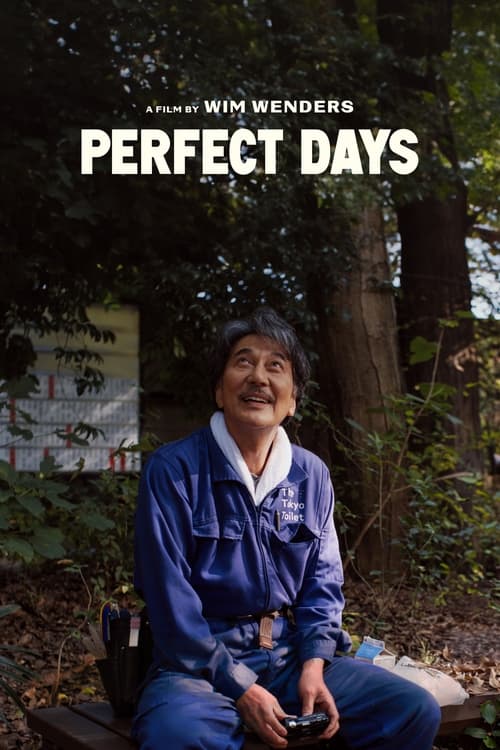
Perfect Days 2023
- Director
- Wim Wenders
- Year
- 2023
- Runtime
- 124 min
- Rewatch
- No
- Letterboxd
- @zanadu →
The first thought I had when I stepped out of the train in Kyoto to experience my first Japanese city, was "quiet". I was coming off of a long flight and wanted to be ready to be greeted by the hustle and bustle of a big city. I remember feeling confused. It was the morning, around 8:30 AM, a time when cars are honking, people are shouting into their phones and the world is waking up, and yet I didn't hear the chaos of that at all. I could hear birds chirping and casual conversations along the sidewalks. There were the occasional sounds of a cars engine, but all in all it felt like the whole city had quieted down. I remember thinking this wasn't the way cities are supposed to be; I live in NYC - a city with perhaps the opposite reputation.
I hadn't had that sense of awe for the quiet and serene in an unlikely place until today, riding my scooter to work. This past weekend a friend told me how he hadn't been listening to podcasts or music for the past few weeks to allow his brain a rest from constant content bombardment, and I liked the way that sounded so I decided to give it a try. Today of all days, I decided not to wear earbuds on my morning commute. I decided to ride in quiet, listening, and allowing myself to get lost in thought.
I arrived in SoHo around 9 AM and, to my surprise, I had the same thought as I did in Kyoto of "quiet". All this time, I expected there to be honking, and beeping, and car sounds all around. I thought there would be people shouting on the phone, babies crying and the sounds of commotion that regularly accompany the morning commute. I thought this, because I normally always listen to music and podcasts on my morning commute. I blocked myself off from the world around me with music and podcasts, and imagined an ugly reality outside. To find the beauty and serenity in the city, all I had to do was listen.
It's fitting that I saw Perfect Days the day I started this exercise. I felt such a kinship with Hirayama and a desire to live my life more like his. His character gave me a longing for the simple life and painted a picture of the inherent, human NEED for music AND quiet in such a simple, beautiful way. But my understanding of the character evolved throughout the movie and gave me a deeper understanding of my life in a way that I have yet to fully comprehend.
In the first half of the movie, I saw the music as an appreciative exercise for Hirayama. He listens on the way to work to brighten the day ahead and uses it to unwind on his days off. My favorite parts of the movie were when he shuffled through his cassetes and dipped the right one for his commute into the tray. The needle drops in this movie were perfect. I found it nostalgic and sweet that he deeply cherished his physical collection.
In the second half, I saw his music and books and adherence to routine as a coping mechanism. I don't know how Wim Wenders and Koji Yakusho did it but I felt both of these states in Hirayama. I felt his deep love for music and, as more details of his life creep their way in, I understood it as his attempt to block out the world outside. Music is his ray of sunshine in his otherwise bleak world.
I don't think I've gone a day without music in over 10 years. I listen to it when I'm walking places, when I'm waiting for something, when I'm working, and often right when I wake up. I love music and I loved feeling Hirayama's love as well. But my exercise today, the quietness of my part of the city that I had failed to recognize, and this achingly beautiful movie, showed me that music can also be a cover. I tap into music on Spotify ("what shop is that") and block myself off from the music in the mundane. The quiet of a city street. The rustling of leaves.
I love music and I always will. But maybe I need to take my earphones out a bit more. Maybe I need to be like Hirayama more and take pictures of the trees, sit in peace and watch the world slowly go by. Yes, to listen to music but to also allow myself a break, a motivated effort to hear the "quiet"